
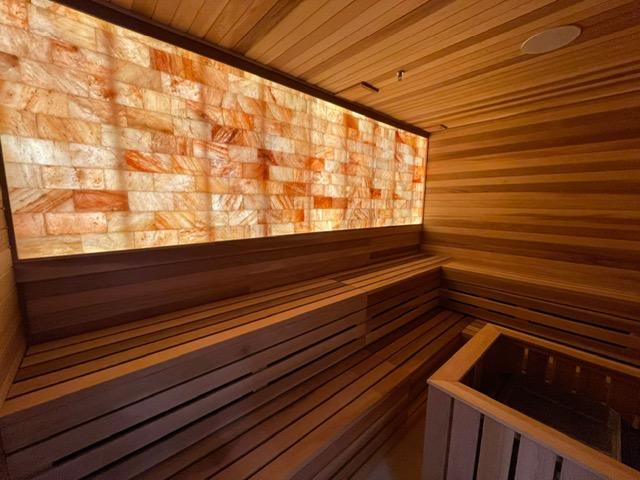
If you’ve ever wondered whether salt saunas are just a trend or a true wellness upgrade, you’re not alone.
While both types of saunas provide relaxation and detox benefits, they deliver very different experiences. Traditional saunas are known for their intense heat and wood-lined interiors, while Himalayan salt saunas add the glow and mineral presence of pink salt walls, creating a more meditative environment. This article explores the key differences between salt saunas and regular saunas so you can decide which sauna is better for your needs.
1. Heat Source and Temperature
Traditional Sauna
- Uses wood-burning stoves, electric heaters, or infrared panels.
- Temperatures usually range between 160–200°F (70–93°C).
- The experience is often intense, with a heavy, dry heat that produces rapid sweating.
Himalayan Salt Sauna
- Also uses electric or infrared heat but incorporates walls lined with Himalayan salt blocks.
- Temperatures are typically lower, around 120–150°F (49–65°C).
- The heat feels gentler, making it more approachable for beginners or those sensitive to extreme temperatures.
2. Atmosphere and Ambiance
Traditional Sauna
- Wooden interiors, usually cedar or spruce, create a rustic, authentic feel.
- The focus is purely on heat and sweat therapy.
Himalayan Salt Sauna
- Salt bricks glow with a soft amber-pink hue, creating a spa-like ambiance.
- Some saunas integrate halotherapy (salt air dispersion), giving the air a crisp, mineral quality.
- The environment is as much about mood and relaxation as it is about heat.
3. Health and Wellness Focus
Traditional Sauna
Primarily promotes:
- Circulation and cardiovascular support
- Muscle recovery and tension relief
- Detoxification through sweating
Himalayan Salt Sauna
Offers the same heat-related benefits as traditional saunas but adds the potential advantages of salt exposure:
- May support respiratory comfort, especially for those with mild congestion
- Believed to release negative ions, which some claim enhance mood and reduce stress
- Often associated with skin hydration and clarity
Note: While anecdotal benefits are widely reported, clinical evidence on Himalayan salt saunas is still limited compared to traditional sauna studies.
4. Quick Comparison Table
| Feature | Traditional Sauna | Himalayan Salt Sauna |
|---|---|---|
| Temperature | 160–200°F (70–93°C) | 120–150°F (49–65°C) |
| Heat Experience | Intense, heavy dry heat | Gentler, more tolerable |
| Interior Design | Wood (cedar/spruce) | Glowing Himalayan salt walls |
| Primary Benefits | Circulation, detox, muscle recovery | Relaxation, respiratory comfort, skin benefits (potential) |
| Ambiance | Rustic, traditional | Calming, spa-like, meditative |
| Accessibility | Common in gyms and spas worldwide | Found in luxury spas, retreats, boutique centers |
| Best For | Athletes, those seeking intense heat therapy | Stress relief seekers, beginners, wellness enthusiasts |
Final Thoughts
Both traditional and Himalayan salt saunas have their place in the wellness world. If you prefer intensity, tradition, and a focus on sweating and circulation, a traditional sauna may be your go-to. If you’re drawn to atmosphere, stress relief, and the soothing glow of pink salt walls, a Himalayan salt sauna offers a unique and memorable alternative.
Ultimately, the “best” sauna comes down to personal preference—and many wellness enthusiasts enjoy alternating between the two for a balance of tradition and modern relaxation.